197 Countries · 8,744+ Embassies

Find Embassies & Consulates Worldwide

Marc Hoffmann, Senior Visa Consultant at MyJet24 By Marc Hoffmann, Senior Visa Consultant · Updated

Locate embassies, consulates, and diplomatic missions in 195+ countries with complete contact information

8,744
Embassies & Consulates
197
Countries
6,105
With Complete Information
11
Languages Supported
Embassy vs. Consulate — in short

An embassy is a country's primary diplomatic mission in another nation — located in the capital, headed by an ambassador, and responsible for the overall diplomatic relationship. A consulate is a secondary office in another city that handles citizen services such as passports, visas and assistance abroad. In short: embassies manage diplomatic relations, consulates manage practical consular services.

Popular Embassy Searches

Browse All Countries

Find embassies by selecting any country below

View All Countries

Embassy vs. Consulate vs. High Commission: What's the Difference?

Diplomatic and consular offices are not interchangeable. Their rank, location and powers are fixed by two international treaties — the Vienna Convention on Diplomatic Relations (1961), which governs embassies, and the Vienna Convention on Consular Relations (1963), which governs consulates. In short: an embassy handles the full country-to-country relationship from the capital, while a consulate delivers day-to-day services such as visas and passports in other cities. Knowing which office does what helps you apply to the right place the first time.

Illustration of an embassy building in a capital city
01

Embassy

Headed by an Ambassador

The senior diplomatic mission of one country inside another, always located in the host country's capital city. It runs the entire government-to-government relationship — diplomacy, trade and defence — and also handles consular services such as visa and passport processing.

Capital cityIssues visasVienna Convention 1961
Illustration of two officials signing a diplomatic agreement
02

High Commission

Headed by a High Commissioner

An embassy by another name — the title used between Commonwealth countries. Its functions and the rank of its head are identical to an embassy; only the name differs, for historical reasons. A British, Indian or Australian mission in another Commonwealth capital is a High Commission.

Capital cityIssues visasCommonwealth
Illustration of staff working inside a busy consular office
03

Consulate-General

Headed by a Consul-General

The highest class of consular post, opened in a major city outside the capital to serve a large consular district. It handles the full range of consular work — visas, passports, notarial acts, document attestation and assistance to citizens abroad.

Major cityIssues visasVienna Convention 1963
Illustration of a smaller consular office
04

Consulate

Headed by a Consul

A smaller consular office covering a regional district. It offers the same core services as a consulate-general on a more limited scale; for complex cases some consulates refer applicants to the nearest consulate-general or the embassy.

Regional cityMost servicesVienna Convention 1963
Illustration of a local business figure acting as an honorary consul
05

Honorary Consulate

Headed by an Honorary Consul

A limited, usually part-time post run by a respected local resident — often an unpaid business figure — rather than a career diplomat. It promotes trade, supports cultural ties and helps nationals in emergencies, but generally cannot issue visas or passports.

Secondary cityLimited servicesVCCR Arts. 58–68
Illustration of a connected world map representing international organisations
06

Permanent Mission

Headed by a Permanent Representative

Not a bilateral mission at all — it represents a country to an international organisation such as the UN, EU or WTO, at that body's seat. It conducts multilateral diplomacy and does not provide public visa or passport services.

Seat of orgNo public serviceUN / EU / WTO
Quick comparison — diplomatic & consular missions
Mission type Located in Headed by Visas & passports Legal framework
Embassy Host country's capital Ambassador Yes Vienna Convention 1961
High Commission Capital (between Commonwealth states) High Commissioner Yes Vienna Convention 1961
Consulate-General A major city outside the capital Consul-General Yes Vienna Convention 1963
Consulate A regional city / smaller district Consul Most services Vienna Convention 1963
Honorary Consulate Cities with no career post Honorary Consul Rarely Vienna Convention 1963 (Arts. 58–68)
Permanent Mission Seat of an international organisation Permanent Representative No public service Host-organisation agreement

Which office should you contact for a visa?

Apply to the embassy, high commission or consulate-general responsible for your area of residence — never an honorary consulate or a permanent mission. Consular districts are assigned geographically, so the right office depends on where you live, not just the country you're visiting. Always confirm jurisdiction, accepted documents and appointment rules on the mission's official website, as these vary by country and change frequently.

Sources: Vienna Convention on Diplomatic Relations (1961); Vienna Convention on Consular Relations (1963), Articles 5, 9 & 58–68; Commonwealth Secretariat.

Frequently Asked Questions

Everything about embassies, consulates, visa jurisdiction and diplomatic missions

What is the difference between an embassy and a consulate?
+
An embassy is a country's main diplomatic mission, located in the host country's capital and headed by an ambassador; it manages the overall bilateral relationship and offers full consular services. A consulate is a smaller office in another major city that handles day-to-day services such as visas, passports and assistance to citizens. Both are governed by the Vienna Conventions of 1961 (diplomatic) and 1963 (consular).
How do I find the right embassy or consulate for my visa?
+
Identify the destination country's embassy or consulate that is responsible for your place of residence. Consular jurisdiction is assigned geographically, so the correct office depends on where you live, not only on the country you are visiting. MyJet24's Embassy Finder returns the verified address, phone, email and opening hours for that mission.
Do I apply at the embassy in my own country or in the destination country?
+
You almost always apply before you travel, at the destination country's embassy or consulate located in your country of residence — not after arrival. For example, to visit Germany you apply at the German embassy or consulate in your home country, at the office responsible for your consular district.
What is a consular district and why does it matter?
+
A consular district is the geographic area a specific embassy or consulate is responsible for. If a country has several missions in your nation, you must apply to the one covering your address, because applications sent to the wrong district are often refused. Always check the mission's jurisdiction before booking an appointment.
Do I need a flight ticket to apply for a visa?
+
Most embassies require proof of onward or round-trip travel, but they do not expect you to buy a real ticket before your visa is approved. A confirmed flight reservation (a dummy or onward ticket) with a valid PNR is widely accepted, including under EU Visa Code Article 14 for Schengen visas. MyJet24 generates a free, verifiable reservation in about 30 seconds.
Can I walk in or do I need an appointment at an embassy?
+
The large majority of embassies and consulates require a pre-booked appointment for visa and passport services and do not accept walk-ins. Appointments are usually booked online or through an authorised visa centre such as VFS Global or BLS. Emergency consular help for a country's own citizens is the main exception.
How long does embassy visa processing take?
+
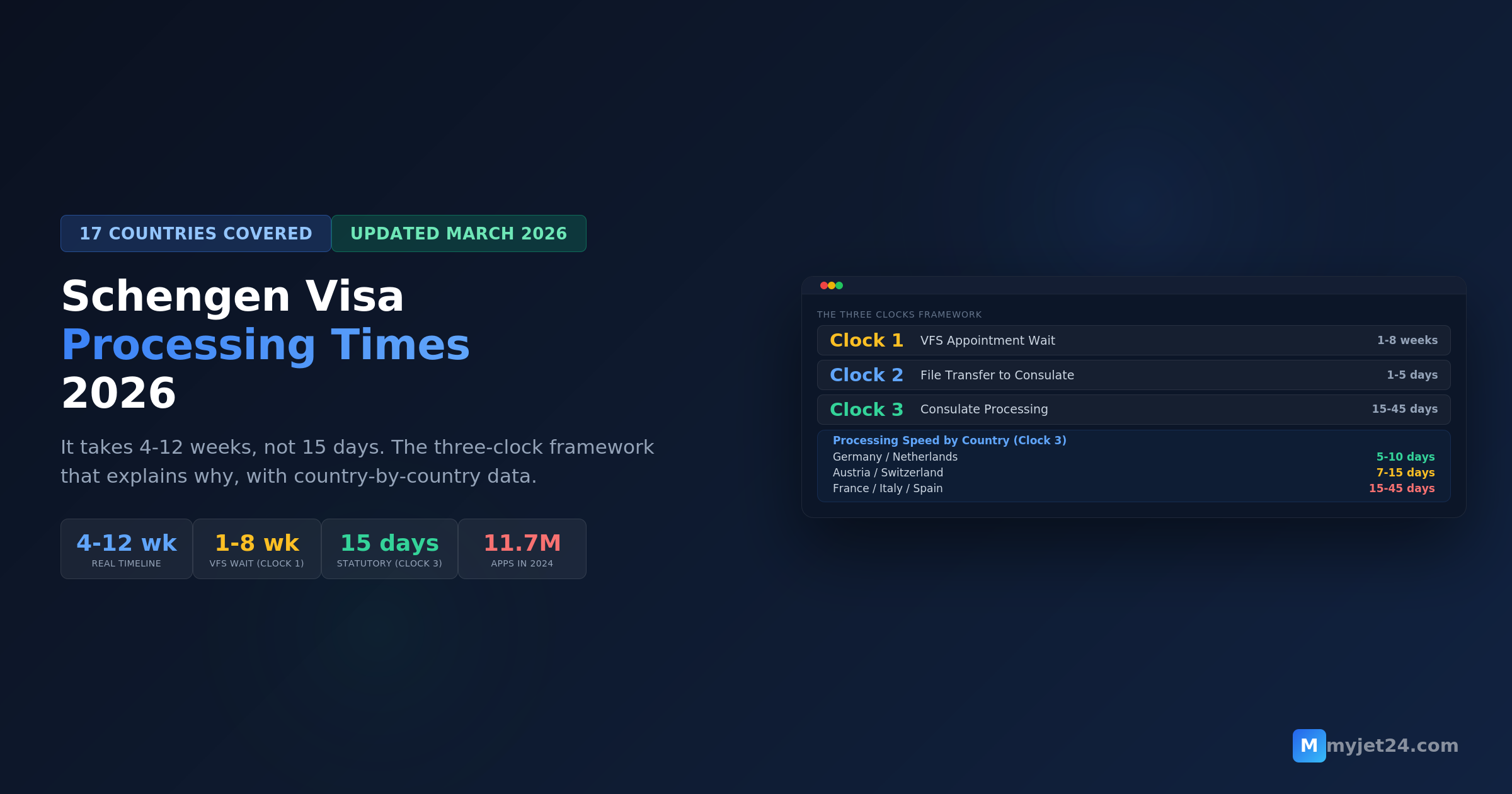
Short-stay visas typically take 5 to 15 working days, though peak season, extra checks or courier time can extend this to several weeks. Schengen short-stay visas are decided within 15 calendar days in most cases, extendable to 45. Apply well ahead of your travel date and avoid non-refundable bookings until your visa is issued.
What is the difference between an embassy and a high commission?
+
Their function is identical. A high commission is simply what Commonwealth countries call their embassies to one another, headed by a high commissioner instead of an ambassador. A British mission in India or an Indian mission in Canada is a high commission, and you apply for visas there exactly as you would at an embassy.
Can an honorary consulate issue a visa or passport?
+
Usually not. An honorary consulate is a limited, often part-time office run by a local resident; it mainly promotes trade and offers emergency referrals, and rarely processes visas or passports. For a visa, contact the career embassy, high commission or consulate-general responsible for your area.
What documents do I need for an embassy visa appointment?
+
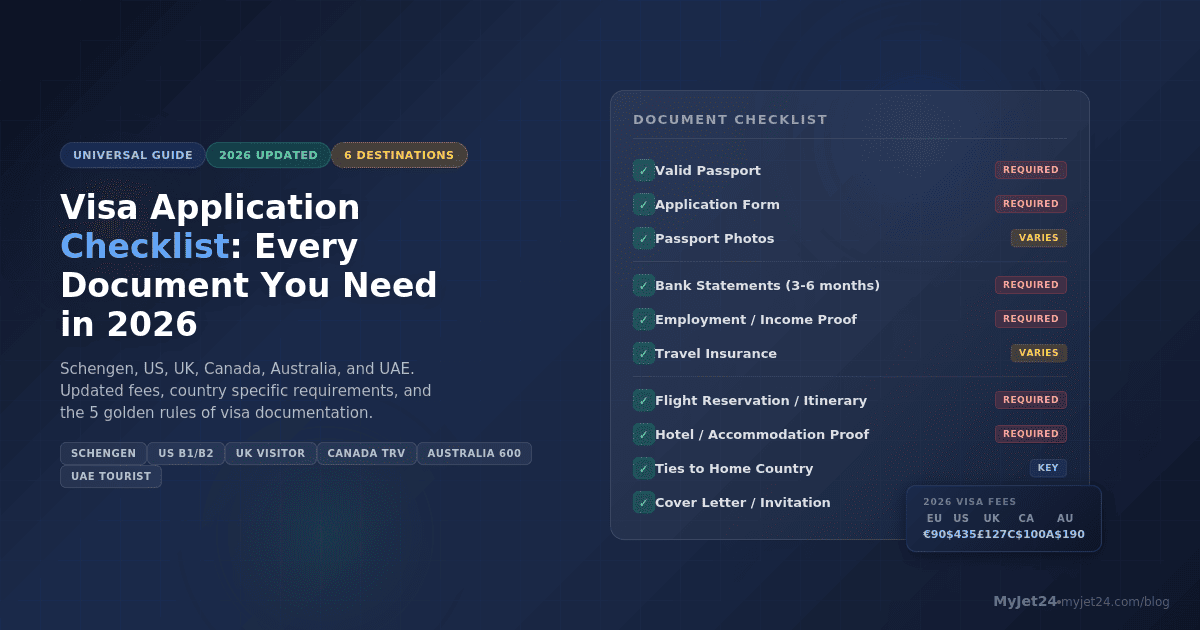
Requirements vary by country and visa type, but a typical short-stay application needs a passport valid for at least six months, a completed application form, passport photos, proof of travel (flight and hotel reservations), travel insurance, proof of funds and the visa fee. Check the specific embassy's official checklist, as missing documents are the most common cause of delay.
Are embassy services free and how much do visas cost?
+
Consular assistance to a country's own citizens is generally free, but visa applications carry a fee. Schengen short-stay visas cost €90 (€45 for children aged 6–11), while other tourist visas commonly range from free to over $200 depending on nationality and destination. Service centres, biometrics and courier delivery can add further charges.
What if there is no embassy of my destination country where I live?
+
When a country has no mission where you live, another of its embassies is usually accredited to cover your country from a neighbouring capital, or applications are handled through an online portal or a visa service centre. The Embassy Finder shows the nearest responsible mission so you know exactly where to apply.
How do I contact an embassy in an emergency abroad?
+
If you lose your passport, are detained, or face a medical or safety emergency while travelling, contact your own country's nearest embassy or consulate — they provide emergency travel documents and assistance to nationals. Save the mission's 24-hour emergency number separately from your passport, as many countries also operate a foreign-ministry hotline.

Need Professional Visa Documents?

Professional visa documents — embassy-ready, instant PDF delivery

256-bit SSL encrypted Secure payment via Stripe Money-back guarantee

About Embassies & Consulates

An embassy is the official diplomatic representation of one country in another country's capital city. It serves as the primary point of contact for visa applications, passport services, and consular assistance for citizens abroad. Consulates are smaller diplomatic offices located in major cities outside the capital, providing similar visa and passport services to a broader geographic area.

When applying for a visa, you typically need to visit the embassy or consulate responsible for your jurisdiction. Each diplomatic mission has its own requirements, processing times, and appointment systems. Our Embassy Finder helps you locate the correct embassy or consulate for your nationality and destination, with verified contact details, addresses, and operating hours.

Most embassies require applicants to submit a flight itinerary or proof of onward travel as part of their visa application. A dummy ticket from MyJet24 is accepted by embassies and consulates worldwide as a valid flight reservation document. It includes a booking reference (PNR), passenger details, and professional airline formatting — exactly what visa officers expect to see.

Whether you are applying for a tourist visa, business visa, student visa, or transit visa, having the correct embassy information and proper documentation is essential for a successful application. Use our Embassy Finder to locate your nearest diplomatic mission and generate a free dummy ticket to include with your visa application.

Expert Guides
Visa Interview Preparation: What Officers Ask Guide

Visa Interview Preparation: What Officers Ask

Real questions & how to answer

Read guide
Visa Application Checklist 2026 Guide

Visa Application Checklist 2026

Every document you need

Read guide
Schengen Visa Processing Times 2026 Guide

Schengen Visa Processing Times 2026

How long it takes by country

Read guide
How to Write a Visa Cover Letter Guide

How to Write a Visa Cover Letter

Templates for every visa type

Read guide